
FOG (Fats, Oils, & Grease)
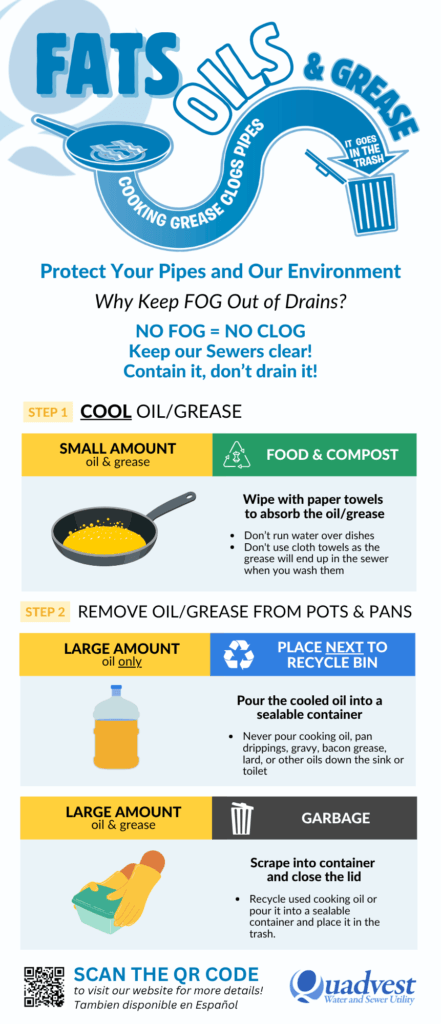
No FOG. No Clog. Keep Our Sewers Clear.
FOG stands for fats, oils, and grease – and while it may seem harmless to rinse them down the sink, they can cool, harden, and build up inside your pipes. Over time, this can lead to clogged drains, sewer backups, costly repairs, and wastewater system issues.
A few simple habits in the kitchen can help protect your home, your neighborhood, and our wastewater system.
Contain It. Don’t Drain It.
1. Let It Cool
Allow oil, grease, and pan drippings to cool before handling.
2. Wipe before you wash
Use a paper towel to wipe grease from pots, pans, dishes, and utensils before rinsing.
3. Scrape it into the trash
Scrape food scraps, sauces, gravy, bacon grease, shortening, and oily leftovers into a container or trash bag – not the sink.
4. Use a sealed container
For larger amounts of cooking oil, pour cooled oil into a sealable container and place it in the trash. For extra-large amounts, mix oil with cat litter or absorbent material before throwing it away.
Never Pour These Down The Drain
- Cooking Oil
- Bacon grease
- Butter or margarine
- Gravy and sauces
- Salad dressing
- Creams and dairy-based liquids
- Shortening or lards
- Food scraps
- “Flushable” wipes
Extras Ways to Prevent Clogs
- Use a sink strainer to catch food scraps
- Limit use of the garbage disposal
- Compost food waste when possible
- Throw wipes in the trash – never the toilet
- Choose environmentally safe cleaning products when possible
Why It Matters
When FOG goes down the drain, it does not just disappear. It can stick to the inside of pipes, collect food and debris, and create blockages that impact your home and the larger wastewater system.
A small change in your kitchen can make a big difference underground.
Need Help?
If you are experiencing a wastewater backup or service concern, contact Quadvest Customer Support.
Phone: 281-356-5347
Email: support@quadvest.com
FOG (Fats, Oils, & Grease)
No FOG. No Clog. Keep Our Sewers Clear.
FOG stands for fats, oils, and grease – and while it may seem harmless to rinse them down the sink, they can cool, harden, and build up inside your pipes. Over time, this can lead to clogged drains, sewer backups, costly repairs, and wastewater system issues.
A few simple habits in the kitchen can help protect your home, your neighborhood, and our wastewater system.
Contain It. Don’t Drain It.
1. Let It Cool
Allow oil, grease, and pan drippings to cool before handling.
2. Wipe before you wash
Use a paper towel to wipe grease from pots, pans, dishes, and utensils before rinsing.
3. Scrape it into the trash
Scrape food scraps, sauces, gravy, bacon grease, shortening, and oily leftovers into a container or trash bag – not the sink.
4. Use a sealed container
For larger amounts of cooking oil, pour cooled oil into a sealable container and place it in the trash. For extra-large amounts, mix oil with cat litter or absorbent material before throwing it away.
Never Pour These Down The Drain
- Cooking Oil
- Bacon grease
- Butter or margarine
- Gravy and sauces
- Salad dressing
- Creams and dairy-based liquids
- Shortening or lards
- Food scraps
- “Flushable” wipes
Extras Ways to Prevent Clogs
- Use a sink strainer to catch food scraps
- Limit use of the garbage disposal
- Compost food waste when possible
- Throw wipes in the trash – never the toilet
- Choose environmentally safe cleaning products when possible
Why It Matters
When FOG goes down the drain, it does not just disappear. It can stick to the inside of pipes, collect food and debris, and create blockages that impact your home and the larger wastewater system.
A small change in your kitchen can make a big difference underground.
Need Help?
If you are experiencing a wastewater backup or service concern, contact Quadvest Customer Support.
Phone: 281-356-5347
Email: support@quadvest.com